
Is there a more productive way how to spend a Sunday night than going through a somewhat unstructured bullet journal? Yes.
Did this deep dive into my own personal productivity help me better understand my productivity and creativity needs? Also yes.
My quest for a very creative way to keep up with my to-dos
I like to think about my personal productivity as a means to having more time for things that matter to me.
One of those is definitely creative work, so when deciding my own system, I knew that the only way to make me use it over long term was to make it very fun.
I love pen-and-paper lists. I draw or hand letter all the time, to help me think, to shift gears, to give my thoughts structure. I need to create my own structure to do things.
Based on these assumptions, I opt for A6ish format bullet journal with dotted paper – enough structure to write to dos, not too much visual clutter to interfere with my drawings, and just enough dots to power wire framing.
Analysing 93 weeks of my life
Funnily enough, in my legal innovation work, I always say to everyone: you have to start with getting visibility and data before you do anything.
So I took my own advice and decided to not only look back in a qualitative way, but also inject a quantitative element.
Key things that I wanted to find out about were:
- Is the system working in attracting enough of my attention?
- Do I set myself too many / too few priorities?
- Is there any way how I can tailor it more to my needs?
The structure of the dataset
The dataset contains the following parameters:
- Identifiers (week and year)
- Entry: did I put in entry of that week? (boolean)
- Todos: how many small tasks did I write down? Example: write email to a potential guest mentor for my course (integer)
- Big goals: how many big goals did I write down? Example: get guest mentors for my course (integer)
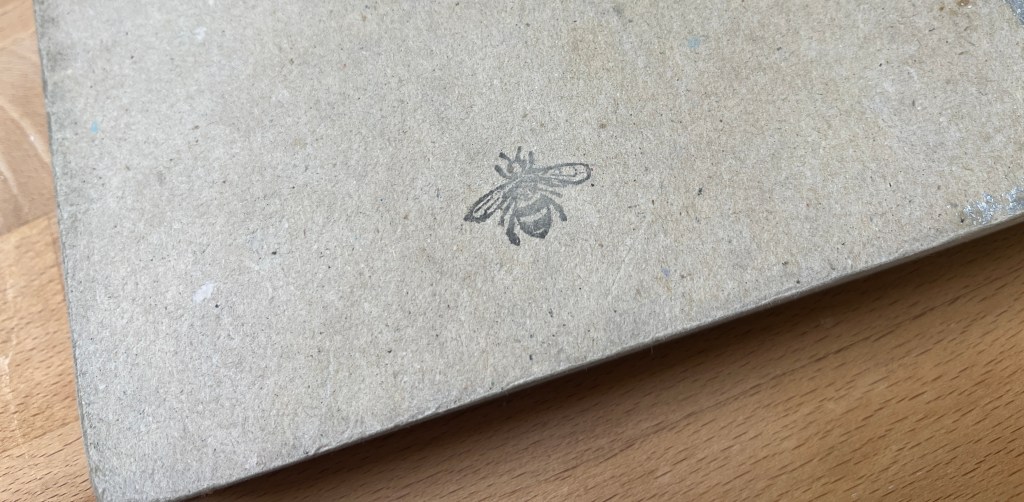
- Bees: I bought a cute bee stamp and I use it a lot (integer)
- Meal plan, sketch, wireframe, tracker, weekly wins, map, big lettering, packing list: did I have any of those in my notes for that week? (all boolean)
- Color: which colours did I use in the spread
- Language: which language did I write my entry in
After the analysis, I also added:
- Done todos and done big goals
What did the data tell me
I tracked 93 full work weeks in the planner.
In each spread, I had a set of big goals (520 in total) and daily to-dos (2194 in total), and a lot of space for creative note taking. My fulfilment percentage was 64% for big goals and 78% for daily to-dos. I think that this means that I am setting ambitious targets, but I do not always end up doing everything.
With the big goals, there is definitely a diverse array of what constitutes a big goal – sometimes it was something like posting on Attorney-at-Code (which takes me many hours to write), going boxing (one hour), or buying new router (20 minutes using GPT for selection, but I procrastinated like crazy on this one). There are also repeating goals. Ultimately, I think 64% is still fine.
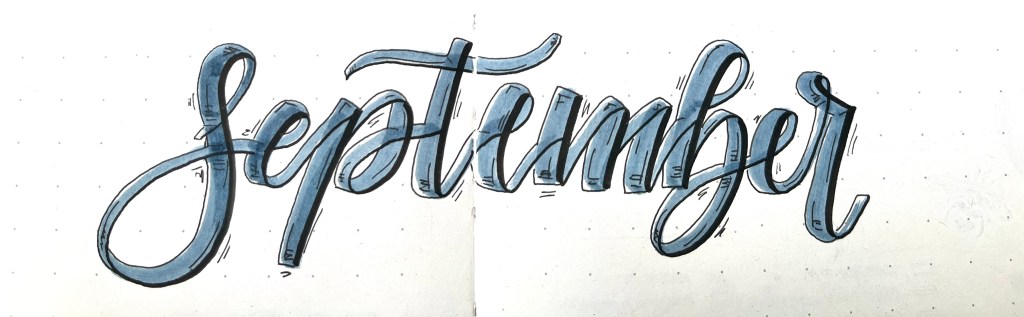
In terms of the creative element, I filled the pages of the week with large frame hand lettering (in 76 weekly spreads), wireframes (in 52 weekly spreads), random sketches (in 52 weekly spreads), process and system maps (in 37 weekly spreads), and trackers of habits and intentions (in 33 weekly spreads). There was virtually no correlation between the percentage of to-dos or big goals fulfilled and if I did any of these. In light of using it so much for quick thinking, I have the journal always open on my desk, so I do believe it is effective for maintaining my attention.
I used nine different languages, with English (93 times), Czech (92), Swedish (13), French (9), Japanese (7), Italian and Dutch (both 3), Spanish, Turkish (both 2), Finnish (1). Prevalence of Swedish was expected given my love affair with Stockholm. What surprised me is that I did not use German at all, although it is in my top 5 in terms of fluency.
The bee stamp was the best investment, as I used it a grand total of 250 times.

What did I learn?
In terms of process, I have been getting back into working with data in python using pandas, numpy, and other libraries. And this has been such a fun personal project.
Interestingly, I was using Mistral’s Le Chat for debugging, and anecdotally it seemed to work better than GPT4 for this specific work, especially when dealing with value errors.
As to my findings, I concluded that the bullet journal method really works for me. Especially with the wireframes, I can see how my approach has developed, how the iterative and very visual thinking really helped me fuel my creativity and get the work done.
I also could see the results of how my approach to tracking my days evolved. After reading 4000 Weeks and Essentialism, I started being a lot more intense about prioritising. I started highlighting my most important task for the day.
At the beginning, I used to do a monthly spread. I concluded that totally does not work for me, because I am always more focused on the weekly and don’t really go back and forth. This has led me to the development of the practice of closing my week: on Sunday night, I highlight everything that remained open from the last week and move it as to dos for the next. I codified this process and that made all the difference.
Last but not least, next time I will be wondering if it is worth buying a cute stamp in a local stationary shop, the answer is yes.
Food for thought
During a workshop on personal project management at Faculty of Law, Charles University, I asked the students: how do you track your to-dos?
And those who shared their approach all noted that they do track, but hardly ever actually do the to do.
Where do you fit into this?
And is there any way how you could tailor this system to better serve you?
 Baru Obračajová
Leave a comment