
I am a big fan of Duolingo – as of the time of writing, my streak is over 1130 days long, and I share the joy of gently bullying each other about our language learning with many of my closest friends.
Given that I devote more of my screen to the owl than the gram, I was definitely curious what kind of data Duolingo gathers about me – and if I could find there any more fuel for my journey towards seamless use of subjuntivo.
Getting the data from Duolingo
I request my data via the Duolingo Data Vault.
The whole process took less than three hours, announced by a dutiful email notification.
To get the data, you only need your Duolingo password (which of course I needed to reset first).
Overall, the process was easy and straightforward.
What data did I get?
I got 33 files in a zip, with the only really interesting bits being:
- Languages (I have 18 languages and music on Duolingo with varying degrees of commitment)
- List of all the Duolingo stories I finished
- Leaderboards and weekly scores (I take the Duolingo competition very seriously)
It took me some time to rationalise how Duolingo internally shortcuts languages (zs for Mandarin Chinese, dn for Dutch, and nb for Norwegian got me confused).
Besides that, there were other files:
- System data (authentication data, links to all my previous profile pics and avatars)
- Encrypted avatar files
- List of me spending the Duolingo money (too bad that it is not fully indexed, I would like to know how many streak freezes did I use)
What did I learn
My journey with Duolingo started on 29 December 2013. I use it in all sorts of contexts – from super serious Japanese study to my friends challenging me to take the Czech sorting text in a Saturday night fever.
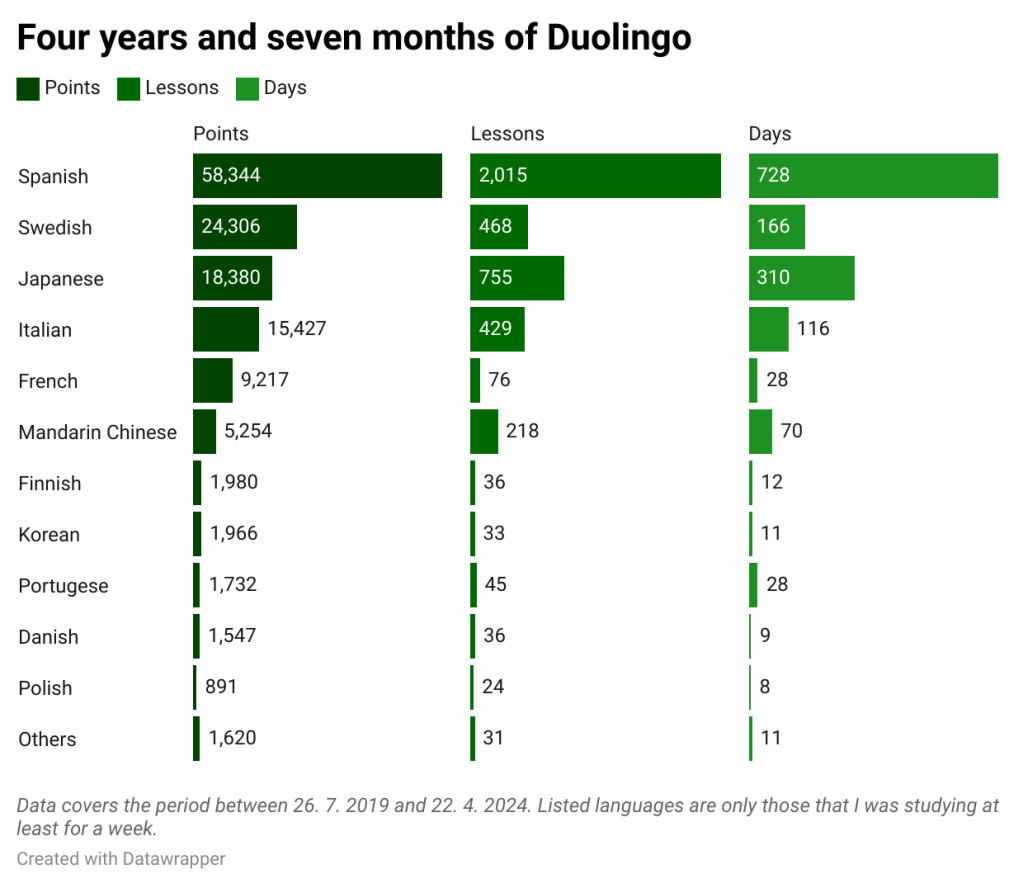
I knew in which language in which I gained the most points from the app (top 3 being Spanish, Swedish, and Japanese).
I generally have the most points, active days, and amount of lessons for Spanish, mostly because I spent an insane amount of time learning it especially during the pandemic.
On some days I was shifting gears and doing multiple languages. My understanding is that when I did that, it was counted as an active day in all languages.
What I found interesting is that I had different point per lesson average ratio for different languages. For Swedish I had almost twice the points for almost the same amount of lessons and days active (24306 points / 468 lessons / 166 days) than with Italian (15427 points / 429 lessons / 116 days). Worst was Japanese and Mandarin Chinese, mostly because I do not blast through the lessons like I do with Swedish.
This tells me that next time I need to gain more points to win my weekly leaderboard, I am better off doing that in Swedish (or French or Korean).
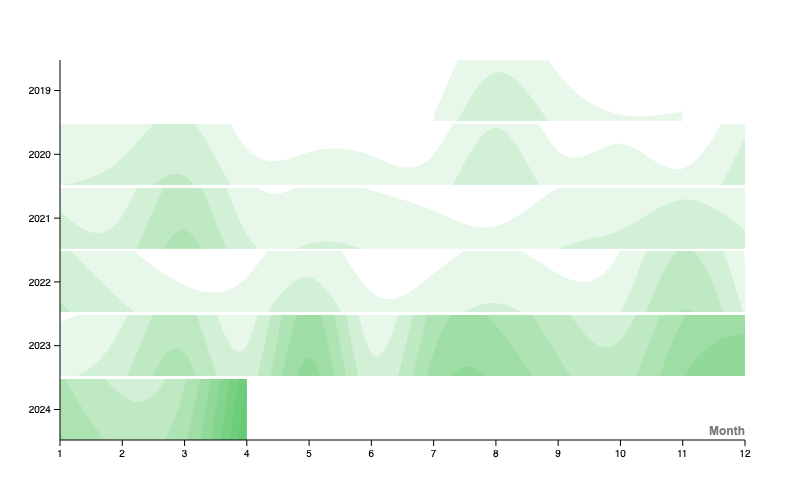
As to my weekly activity, I am happy to report that it has been steadily increasing. The leaderboards date only to July 2019, and I think it is a little sad that I cannot take a look at my scores all the way back to 2013. The chart below shows my monthly average scores.
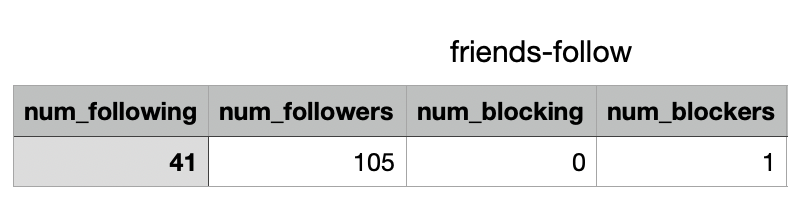
Funnily enough, in reviewing my friends, I found out someone blocked me on Duolingo. Of course, with my moderate fame of 105 Duolingo followers, I find that devastating.
Overall, probably not as steamy gossip as what you could get from Tinder.
If you want to be friends on Duolingo, you can find me here.
Baru
 Baru Obračajová
Leave a comment