
Modern Lawyers: Innovation, Design and Tech in Legal Practice is an elective that I have been teaching at Faculty of Law, Charles University since 2022.
The effective goal of this class is that its alumni approach legal problems effectively and with intentional use of modern methods and technologies. The foundation is that the class needs to primarily serve students’ best interests and that if we expect students to do things differently, the teaching needs to rise to the same standard. In terms of substance, the class includes an introduction to legal design, technology, operations, project management, and change management.
Why modern lawyers
The ability to work with new technologies, critical and creative thinking, and modern approaches to law are a key career advantage. It can open the doors to global roles in an otherwise rather locally dependent industry.
Innovation has not been traditionally systemically included in law school curricula in the Czech Republic. New approaches to law, such as legal design or legal operations, have been neither mentioned, nor incorporated in existing classes. This means that a law school alumna usually leaves school only with a minimal knowledge of information systems and technology-assisted approaches, limited to legal information systems and MS Word.
Generative AI
How Modern Lawyers are designed
The class is designed iteratively and each semester entails testing and validation of various interventions. One prototyping cycle encompasses the period of about one month before the start of the semesters and two weeks after its end.
The table outlines the methods applied across the concluded semesters. Participative design has played a key role in all three, whereas the participants are invited to actively shape the class. This happens via multiple avenues of qualitative and quantitative feedback at various points of time, as well as through co-creation opportunities.
| Semester | Applied methods |
| Winter 2022/2023 | Design space mapping, analysis of existing courses on these topics in the Czech Republic and abroad Reflection of my own experience at the Faculty of Law and interviews with current and past students, teachers, and course supervisor Gathering, analysis, and reflection of the student feedback through entry and exit questionnaires, check-in and check-out during each class unit Deep reflection with students at the end of the semester |
| Summer 2022/2023 | Co-design workshop with alumni Gathering, analysis, and reflection of the student feedback through entry and exit questionnaires, check-in and check-out during each class unit Deep reflection with students at the end of the semester |
| Winter 2023/2024 | Two co-design workshops with alumni Gathering, analysis, and reflection of the student feedback through entry and exit questionnaires, check-in and check-out during each class unit Deep reflection with students at the end of the semester |
Data
Feedback questionnaires
Qualitative and quantitative feedback is gathered in written form in two ways:
- Entry and exit questionnaires (demographic questions, study preferences, existing knowledge)
- Check-in and check-out at the beginning and at the end of each class unit (energy levels, perceived learning, overall impressions, additional questions based on the selected activities)
Feedback is used in the activity selection within one semester (see below) as well as in multi-semester comparison. Key tracked indicator is for example whether there were two classes in a row with energy drop and the overall level of perceived learning and impressions.
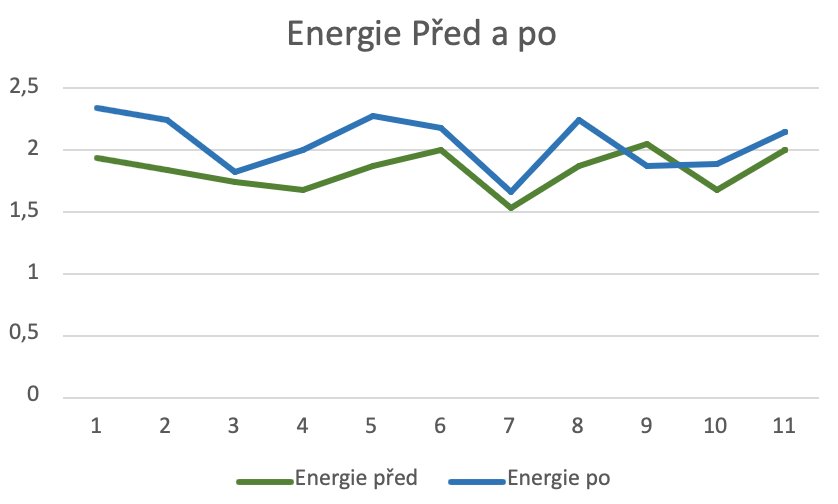
An example of energetic map from the check-in and check-out on a scale 1 (I feel tired) to 3 (I feel energized). Class no. 9 was the only one with a lecture format without interactive elements.
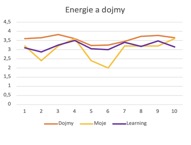
An example of impression and perceived learning map from the check-in and check-out on a scale 1 (strongly negative) to 3 (strongly positive). For comparison, I also added my own class rating, which was logged independently of student feedback
Codesign workshops
There were three codesign workshops with the students as voluntary sessions between classes.
Each codesign workshop had three priorities for discussion based on both qualitative and quantitative student feedback. The input of the students has significant input on the next semester. For example, students decided to reorder certain classes or change the format of certain exercises.
Limitations
It is important to note the following:
- The dataset is not consistent – students are allowed two absences, some students dropped the class after the first class, students can come late for the check-in or forget to do the check-out
- The size of the student body varies between 16 and 25, the sample is thus not statistically representative and even one negative rating has high impact
- First two semesters used a three-point scale, the third a four-point scale
- The data is self-reported
- It is impossible to exclude external factors, such as that students come to class more tired and give worse ratings in the winter semester when it starts getting dark earlier, or on days when it rains
Results
Besides the overarching approach to class design, the feedback produced insights on individual design interventions as well. In this case study, I will note three transferrable artefacts.
Class design
This process has produced a deeply interactive class.
In terms of learning outcomes, the main student output is their final projects as prototypes addressing a selected legal issue. They apply broader legal tech and design principles and patterns and use relevant technological tools (Figma, Jira, Miro, Canva, or others of their own choice in light of the needs of the final project). The students get hands-on experience with prototyping and design thinking. Finally, the students get exposed to a broad range of so-called alternative legal professions.
The class is supported by experts from practice – either by taking part on the instruction or as mentors of the final projects.
I enjoyed classes with Bara very much. The atmosphere was always very friendly and informal which is a welcome exception at the faculty of law. You can get many new information from fields outside law (for example from design, project management and more), but also will learn to connect them with law and how to use them in the legal practice. Working on the final project gives you an opportunity to be creative and will teach you teamwork. I left each class energized. I have generally gained many new acquaintances in the class, heard mega interesting people at the legal tech lecture and I would definitely recommend any class with Bára.
Class map as a simplified course wayfinding
Students appreciate when the course has a clear direction. Classes that included multiple reminders of how they relate to the overall plan of the class as well as within the study needs, had consistently the best rating. Within the third iteration of the class (winter semester of academic year 2023/2024), this has led to the creation of the course map. This represents the flow of the semester and the links between the individual classes.
Executive summaries
Executive summary is a digest of the most important topics and resources. It is sent to the students within days of the class. The executive summaries employ a wide range of formats, such as text (since the first class) and podcast (since the winter semester of academic year 2023/2024). This reflects the various study needs of individual students. In line with the student-centric design principles, executive summaries were proposed by one of the students. The general feedback to the executive summaries is very positive. It also affords a valuable space to set the students up for further self-study.
Thank you also for the weekly executive summaries of our classes, thanks to which I can come back to the topics and all your tips. The course has given me the courage to try an “alternative legal career” and take a plunge into legal tech entrepreneurship. Thank you so much, I am recommending the class to everyone around me!
Methods relative to adjustments for each study group
Each semester, the student body composition differs. The group can have different needs in terms of how interactive the class should be, study styles, or but also overall technological literacy and creative confidence.
This has led to the creation of the group calibration protocol. Its cornerstone is that within the orange classes that centre around tools and techniques, I employ different ratios of lecture and activities, while carefully monitoring the feedback, until it is consistently positive.
| Semester | Lecture (minutes) | Activities. (minutes) |
| Winter 2022 | 35 | 55 |
| Summer 2023 | 50 | 40 |
| Winter 2023 | 45 | 45 |
Reflection
First and foremost, the mere existence of the course and its consistent success are a strong indicator that design and innovation can be taught at a law school. The feedback from both the data gathering within the class as well as the general university rating underscore that students appreciate creative approaches and learning to work with modern technologies.
Secondly, participative approach served as an activation of the students and led to major inputs into the teaching. This is, however, conditional on shared understanding of how the topics and exercises fit the students’ learning goals and the legal practice.
In four years of studying at the Faculty of Law, this class was unequivocally the most beneficial one! And I dare to say that it actually changed my professional life.
The short-term feedback is not representative to the long-term development of the students. At first, the students did not seem used to being asked what they think and what do they prefer. After they have gotten used to giving feedback, many started to leverage this channel. In this respect, it is crucial to demonstrate to the students that there is a clear line between the feedback that has been given and its impact onto the class.
It was the best class that I have attended in three years at the law school. Even though it was taking place late in the evening, I was leaving energized, which has not been happening before. I also didn’t use to enjoy the constant feedback. In my sixteen years in the education system, nobody has really asked me, at least not with serious intentions, what kind of teaching I prefer. When asked, I did not even know how to answer, because I had no idea what actually works for me. Thanks to this, now I am giving myself the task to respond with a written commentary to all my courses.
Another important insight is that when a certain approach did not work, it was not an issue to pivot. Changing different pacing and formats in teaching had positive impact on the retention of attention and led to an increase of engagement in the activities. Above all else, students appreciate when they are treated as equal partners.
Amazing attitude of the teacher to the classes, in terms of topics, class design (including engagement of experts, panel discussions, final presentations), feedback and reacting to the notes and demands of the students. In general, I consider this class as one of the most beneficial ones in the entirety of my studies. Besides the topics that this course explicitly covers (legal tech and design), we have also gotten many information transferrable into the legal practice (including what various legal careers entail) and studies (or life – such as the project management). The lecturer is inspirational, positive, with wide range, and she is incredibly capable of sharing her enthusiasm and knowledge with the students.
Every student group has their own dynamics and preferences that need to be taken into account, instead of being attached to some pre-existing class setup. The students also perceived as highly positive when the teacher expressed interest in them, including learning their names. A general emphasis on creating a safe, enjoyable, and friendly space in the classroom had major impact on the group interactions as well as the willingness of the students to participate and share.
The class was incredibly inspirational, we have tried many interesting concepts and left with practical tips and knowledge not just into our careers, but even into our everyday lives. A major inspiration in particular was the way you led the classes: interactive classes with unbelievably enjoyable atmosphere where everyone got the space to express themselves.
 Baru Obračajová