
This was my first season of fully independent and self-paced practice, building in public, and working across scales and sectors, from small prototypes to major systemic change.
What I am increasingly interested in are interventions that lower the threshold for participation without lowering the complexity of the conversation.
Reading list
This season was all about design theory and revisiting the giants. I aimed at two papers a month to create a reasonable space to engage with the material.
I was particularly happy about finally getting to do a deep study of these three:
- Designerly ways of knowing (Nigel Cross): the meta scaffolding beyond design methodology as a tool of the trade
- Pace Layering (Stewart Brand): in my work in complex systems, which evolve at a slower pace, I usually intervene in the faster layers, which means that my change management has to bridge these two
- From Research Prototype to Research Product (William Odom et al): in design of new tech and patterns that haven’t existed before, this has given me criteria to look at before letting a prototype out in a longer in-the-wild study
All of these represent different lenses that can be applied to product and service design and major pieces of design theory.
Making practice
My making beyond my commercial practice has been across a wide range of projects. What connects them is that they all serve as participation infrastructures for emerging literacies with tactile outputs.
Vibecoding as a teaching scaffolding
Vibecoding gave my teaching superpowers. In this semester, I did three small interventions that had an outsize impact:
- Legal Tech Demos (read more): eight tiny demos of the key patterns applied in legal tech, each practicable under 60 seconds – this solution was visited by about 800 people and has been consistently used by some since I shared it in February
- Legal Innovation Game (read more): instead of talking about intervening in the innovation cycle, I made a single-player online card game, where my students innovate at a court or in-house and then discuss their experience – this was probably one of my favorite reflection sessions of all time
- Focused Timer (read more): a timer without ads that can be displayed on a projector and clearly tells the students what their deliverables are – made directing the classroom a million times easier
I used Lovable, a vibecoding tool, for all these. While in my other making I employ a suite of tools (currently mostly Claude Code / Codex, Cursor, Paper, everything connected to GitHub), these interventions did not need that to lead to great conversations. Do not cut toast with a chainsaw.
Futures Installation at a law school
For two weeks in May, I hung a simple x y axis matrix and 100 stickers at my law school where I teach innovation and design. The question was: How do you feel about the futures of the legal professions, and the participants placed the stickers based on how positive (or not) and how ready (or not) they feel.
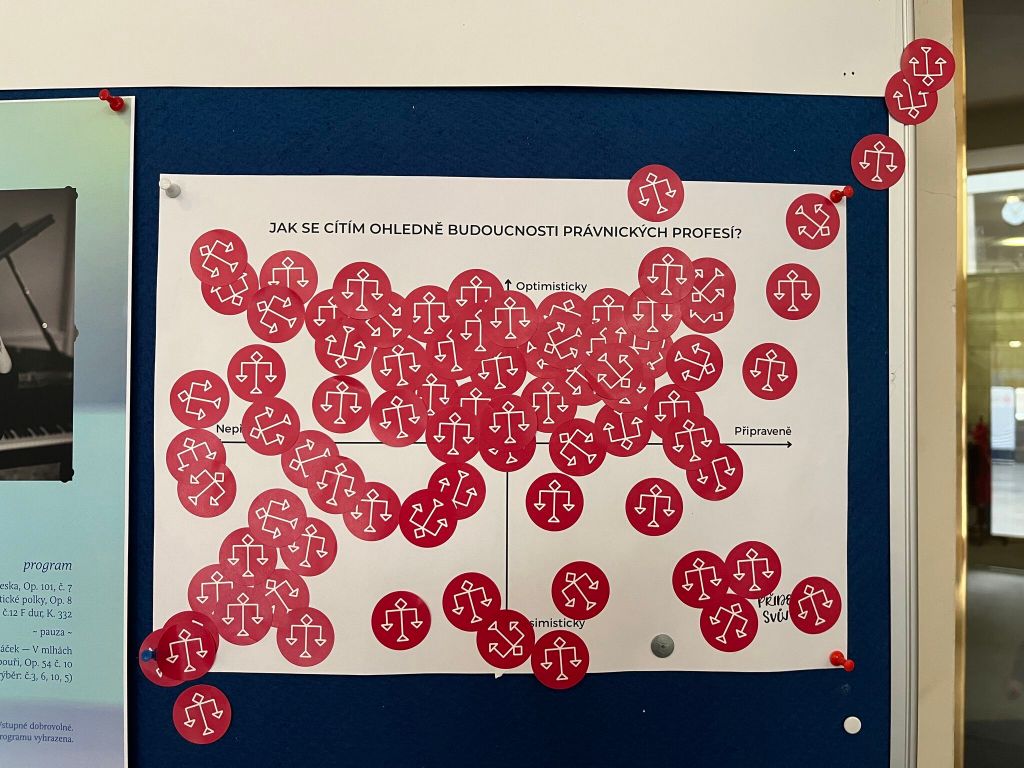
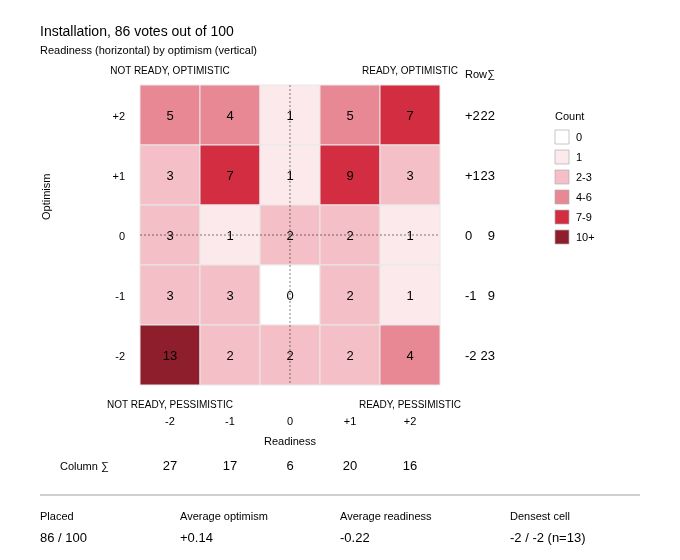
It felt outlandish to put a participatory futures installation at a law school. The sticker sheets were emptied in less than two weeks.
3FF meets Futures Bookclub
In my last reflection, I teased the idea of a Futures Bookclub.
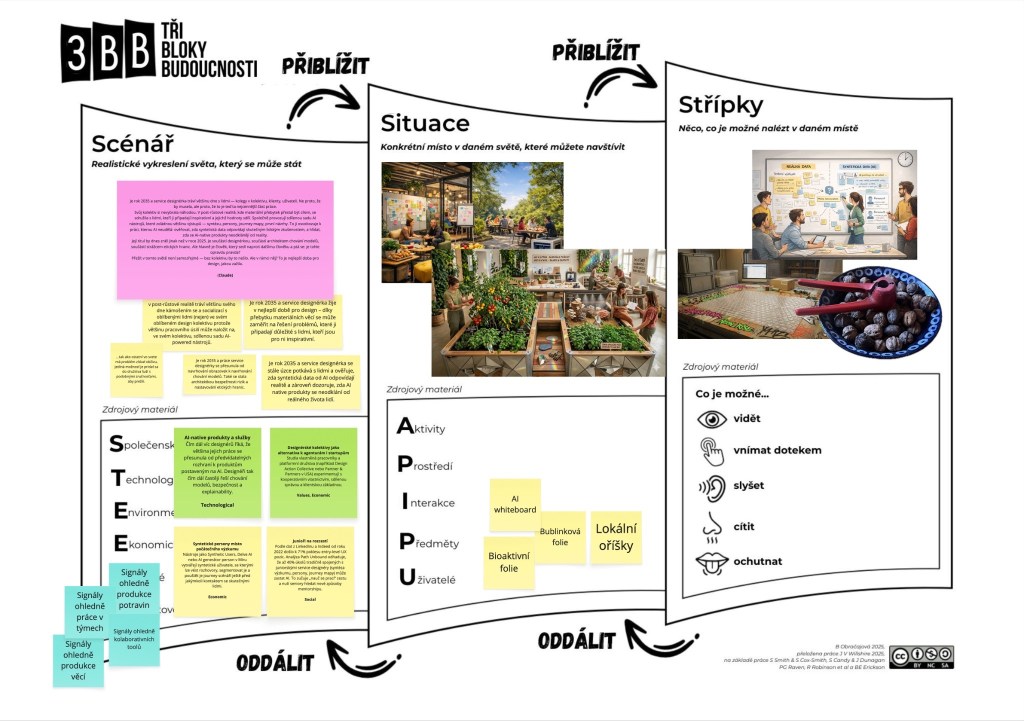
After attending a talk by John Wilshire, I convened a Futures Bookclub session with six friends for a swift walkthrough through the Three Futures Frames canvas. We explored the topic of futures of design work with a menu of method probes, getting the reps in for signal work, scenario formulation, and exquisite corpse.
I experienced work on this canvas over three days with John, Rob Phillips and gem barton last year at the RCA. Our bookclub session was much shorter, so it was interesting to compare the experience with different timeframes.
TWENTY MINUTE FUTURES
TWENTY MINUTE FUTURES is a tiny-yet-powerful zine and a rapid introduction to futures methodologies in a very tactile form.
I first designed and tested this framing at the beginning of 2026. Since then, I have used this tool on multiple occasions, including with lawyers, with consistently positive feedback.
Moreover, two more designers leveraged the tool in their practice. They used the zine within a course about creativity and making and with students of a media workshop. Both noted positive feedback and no difficulties with applying the methodology, which is great news that the framing is transferable and can help enhance futures literacy across target groups.
Reflective practice
Looking back at this season, it was all about paper and analog media alongside an AI-powered practice. It feels like the more complex the system, the more I lean into tactile and participatory ways of thinking through change.
Additionally, I used to mostly share my interventions with my tight knit legal ops community, my clients, and my students, but nowadays I am feeling a shift towards much more public making.
Finally, my practice has been supported by and shaped through mentoring and design critiques with two amazing designers, Matěj Káninský and Roman Sellner Novotný.
Futures
In Fireflies (as I call my extended summer season between late June and mid September), I am immersing myself in learning, long-form writing, books, and writing essays. On the menu are Rob Hopkins, Riccardo Falcinelli, and an overgrown stack of books on my nightstand.
Instead of quick online workshops, I am looking forward to doing longer, in-person events. If you would like to explore working together, you can reach me at baru@attorneyatcode.com.
Baru
 Baru Obračajová
Leave a comment